Camera Labs: Olympus OM-D EM1X Review

Gordan Lang does some crazy long reviews so below I have some excerpts from his Olympus OM-D EM1X review.

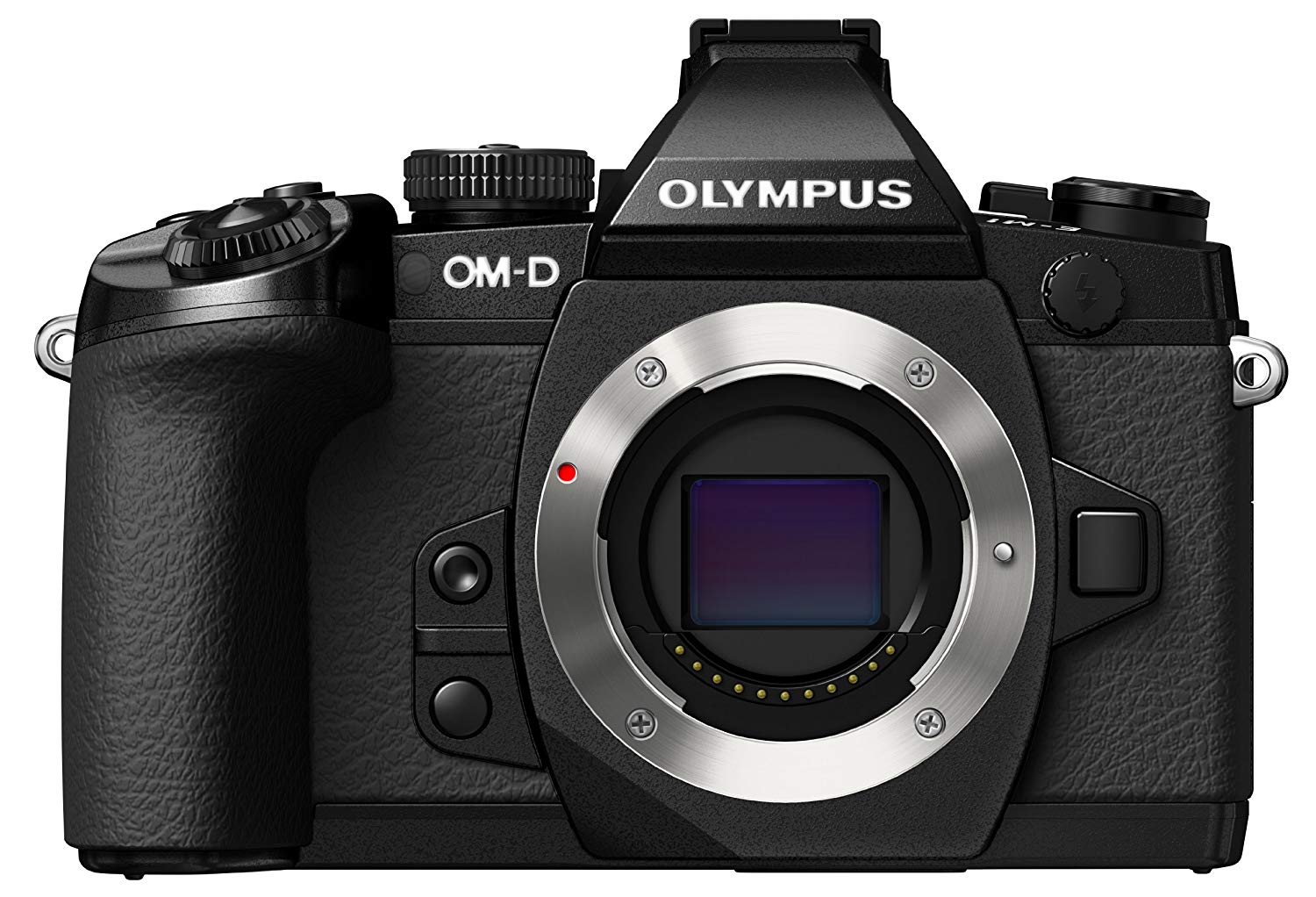
  • Compared to the E-M1 Mark II
    • Shares the 20MP sensor from the E-M1 Mark II
    • Integrated battery grip
    • Larger
    • Toucher credentials
    • Improved AF
    • Better IBIS
    • $2,999
    • Beefed up E-M1 Mark II, but not a replacement
  • Only the second camera to use the 20MP sensor
  • 7 Stops of compensation or 7.5 with sync IS lenses
  • Easy to hand hold beyond 1 second and Gordan made it to 8 seconds without bracing himself
  • They have the best IBIS
  • First IPX1 rated camera – should survive 10 min of rain and he has taken it out for longer without issue
  • He dumped a bucket of water on the camera with Olympus’ permission and it worked fine
  • Half the price of Canon and Nikon’s top of the line pro cameras and smaller/lighter than them
  • Good power button
  • Art filters no longer have a dedicated position
  • Dedicated bulb mode
  • Control dials no longer on the top, but are now embedded in the body for better weatherproofing
  • Lots of buttons on the back and an AF joystick
  • Large 0.83x EVF 2.36million dot LCD
  • LCD was picked for refresh rate
  • Tilty flippy screen so you can shoot selfies of video
  • Tap screen for AF points
  • Quick menu
  • Can swipe through images, but can’t pinch to zoom
  • Each battery is good for about 400 shots
  • If you’re shooting continuously you can easily get over 1,000
  • The camera only shows the status of battery one so if one is low and two is full it will blink at you even though you have an entire second battery to burn through.
  • Twin UHS-II cards
  • High speed is only single AF and lower speeds can do continuous
  • All points are cross type
  • Eye AF and tracking AF are much better
  • Panning with the electronic shutter can cause some issues
  • Pre-shooting works great for shooting birds and the camera works very well for tracking birds, but not as good as Sony
  • Can do focus bracketing with up to 999 shots
  • Can do focus stacking in camera
  • Focus stacking in camera only works with pro lenses
  • Can adjust geometry in camera
  • The handheld high-resolution mode works well
  • The high-resolution shot mode takes a while to process and they take even longer in handheld mode
  • Simulation of ND filters in camera works well, but it slows the camera down a lot
  • Must be in manual or shutter priority mode to use the ND filter simulation
  • Seascape shooters will likely stick to physical ND filters
  • Custom AF Zones is a new feature for making your own custom shapes that can be added to the AF zone menu
  • Lots of AF customization
  • If you have the top dial on bulb timer you can then set up to half an hr in the menus, which makes long exposure easy
  • There is a preview mode for long exposure that only Olympus has
  • Good geotagging capabilities
  • Bluetooth is very useful with the Olympus AP
  • Olympus has great color science, but it oversharpens a bit
  • Not great high ISO so keep it below 1600
  • Great to handhold capture motion blur
  • You really don’t need a tripod with this camera
  • As ISO goes up the Sony a9 becomes a much better option
  • No 4k 60p
  • Video is very much like the EM1 MarkII
  • Can capture 60fps at 20mp
  • 1080 is available up to 120p fps but there is a crop
  • No crop at 4k
  • Cinima 4k only 24p
  • MIS1 adds additional digital stabilization when recording video
  • Very stable when filming
  • Eerily stable for filming video when you stop moving no matter how long the lens
  • Filming with dual IS and non-dual IS lenses is amazingly stable
  • There is a mic input and headphone jack
  • Not needing a tripod makes it a more portable kit
  • Most of the features are available in the E-M1 Mark II
  • It’s hard to make the price leap from the E-M1 Mark II and if you can the Sony a9 might be a better value
  • The Olympus OM-D EM1X is the biggest/heaviest/most expensive m43 camera yet

Follow 43addict on FacebookTwitterInstagram, and YouTube

Olympus OM-D E-M1X: B&H Photo / Amazon / Adorama

Posted in Olympus| Tagged , , , , , , , , , | Leave a comment

DPReviewTV and Richard Wong: Panasonic S1R/S1 Hands-on and Autofocus Performance

DPReviewTV went to Barcelona to review the Panasonic S1R/S1 and even though the camera has beta firmware it looks promising. In their estimation, the Panasonic S1 sensor is on par with similar cameras on the market, but the S1R looks to be quite unique. It is a bit disappointing to hear that the Panasonic S focuses continuously in a similar manner to other Panasonic cameras. Photographers do not find that the CDAF wobble instills confidence, but from what I understand even though the CDAF system wobbles while tracking it is accurate.

Follow 43addict on FacebookTwitterInstagram, and YouTube

Panasonic S1: B&H Photo / Amazon / Adorama
Panasonic S1R: B&H Photo / Amazon / Adorama

Panasonic 50mm f/1.4 S: B&H Photo / Amazon / Adorama
Panasonic 24-105mm f/4.0 S: B&H Photo / Amazon / Adorama
Panasonic 70-200mm f/4.0 S: B&H Photo / Amazon / Adorama

Posted in L-Mount, Panasonic| Tagged , , , , , | 2 Comments

Olympus FY2019/3 Q3 Financial Results: Down 19.0% Year on Year


Consolidated revenue in the Imaging Business amounted to ¥38,338 million (down 19.0% year on year), while operating loss amounted to ¥13,129 million (compared with an operating profit of ¥1,493 million in the same period of the previous fiscal year).

The Imaging Business’s revenue declined due partly to the impact of constraints on supplies of certain existing products and on the number of new products in conjunction with intensifying competition for mirrorless cameras and restructuring of manufacturing locations.

As a result of a decrease in revenues and the recording of costs associated with the restructuring of manufacturing locations and impairment losses of ¥1,345 million, operating loss was recognized in the Imaging Business.

Posted in Olympus| 1 Comment

ATOMOS NINJA V OFFERS 4K 10-BIT 422 HDR RECORDING WITH THE PANASONIC LUMIX S


ATOMOS NINJA V OFFERS 4K 10-BIT 422 HDR RECORDING WITH THE PANASONIC LUMIX S

4 February 2019: Atomos is delighted to announce that as soon as it ships, the new Panasonic LUMIX S1 full-frame mirrorless camera will immediately be able to record 4k (3840×2160) 10-bit 422 HDR footage to the Atomos Ninja V and Inferno monitor/recorders. Recording over HDMI to one of these Atomos recorders will allow recording direct to Apple ProRes or Avid DNx codecs at up to 4kp30 in the HLG HDR format. HDR metadata passed over HDMI from the Panasonic LUMIX S1 to the Ninja V or Inferno allows the HLG signal to be correctly displayed, giving the users an instant and accurate HDR image they can expose and trust. The metadata triggers auto-setup of the Atomos recorders, and the same data is written into the ProRes or DNx file for instant playout to compatible HDR televisions and monitors, or upload to YouTube.

Panasonic will also add 10-bit 422 HDMI output in V-Log gamma via a paid firmware update to the camera in the future. This version of the gamma curve will be the full V-Log, rather than the V-Log L variant found on the GH5 and GH5S. Atomos will record this and are working with Panasonic to fully support the additional options that the upcoming firmware will bring.

The Panasonic LUMIX S1 is the latest in a growing number of large sensor mirrorless cameras to support 4k 10-bit 422 recording via HDMI. The increased image quality brings greater flexibility in post-production for better HDR or SDR images. Stepping up to 10-bit offers greater accuracy with billions of color combinations. This is massively beneficial when utilising computer processing for finishing. Typically, users will see smoother color gradients, eliminating the commonly seen banding in areas with gradual tone change such as blue skies. Recording to an Atomos recorder perfectly preserves this information in the ultimate way possible, combining Panasonic and Atomos technology.

The Panasonic LUMIX S1 has an ergonomic body design that is perfectly partnered with the 5″ Atomos Ninja V HDR monitor/recorder. The Ninja V weighs 360g and sits perfectly on top of the camera. When the two are used together they balance well in the hand, forming an easy to operate camera setup that rivals some traditional cinema cameras.

High bright 1000nit or 1500nit monitoring
Seeing the built-in screen of all mirrorless cameras is difficult in bright conditions. The Ninja V screen has 1000nit of brightness when in SDR mode, allowing it to be used effectively, even when outside. The Ninja Inferno and Shogun Inferno each offer an incredible 1500nit brightness and are well suited to productions where a larger 7” screen is required.

Why external recording makes sense
External recording via HDMI from mirrorless cameras is perfect for users wanting to get the best possible image quality from cameras like the Panasonic LUMIX S1. Until this year users needed to invest in a high-end cinema camera costing ten of thousands of dollars to get a larger than Super35 sized sensor that offered 4K 10-bit 422 recording. Now, with the advent of cameras like the LUMIX S1 combined with the Ninja V, users can have access to just that but at amazing price points – in this case less than $2500 US MSRP for the LUMIX S1 body and $695 MSRP for the Ninja V.

In addition, by moving recording to an external Atomos recorder like the Ninja V, mirrorless cameras are freed of many of their key video limitations. Record time limits are lifted and easy-to-edit Apple ProRes or Avid DNx codecs recorded, instead of harder to edit H.264 or H.265. When recording video with the Panasonic LUMIX S1 and Ninja V you can shoot to the new generation of Atomos AtomX SSDmini drives or Atomos Master Caddy II drives. These are developed with leading brands and offer high speed and high reliability in a compact metal chassis at a highly affordable cost per GB.

ATOMOS NINJA V: B&H Photo / AmazonAdorama
ATOMOS Ninja Inferno: B&H Photo / AmazonAdorama

Panasonic S1: B&H Photo / Amazon / Adorama
Panasonic S1R: B&H Photo / Amazon / Adorama

Posted in Accessories, Panasonic| Tagged , , , , , , , , , | 1 Comment

Leica SL Firmware 3.4 Makes SL Compatible with Panasonic Glass

Leica announced their first L-Mount alliance firmware today and it adds support for Panasonic L-Mount glass. You can read the details below and download the update here.

Firmware Update 3.4
Easy Connect• New QR code for one-step easy pairing of smartphone and camera.
• Fixed WLAN name and password, no submenus for setting name and password.
• No submenus for setting a connection mode, e.g. Create WLAN or Join WLAN.
Compatibility with upcoming lenses from L-Mount Alliance partners• Body-lens communication standard extended for compatibility with upcoming L-Mount lenses.
• Additional menu for updating the lens-firmware of upcoming lenses from L-Mount Alliance partners via SL camera body.
• Compatibility with upcoming L-Mount lenses, that are equipped with an AF/MF switch on the lens barrel. In this case the lens switch is the master for AF/MF mode.
• Compatibility with upcoming L-Mount lenses, that are equipped with an OIS mode switch on the lens barrel. In this case the lens switch is the master for OIS mode.
Bugfix• In some cases the VARIO-ELMARIT-SL 24-90 f/2.8-4 ASPH. did show front focus issues. Lens Firmware 1.1 does solve this issue.


Follow 43addict on FacebookTwitterInstagram, and YouTube

Leica SL: B&H Photo / Amazon / Adorama

Panasonic S1: B&H Photo / Amazon / Adorama
Panasonic S1R: B&H Photo / Amazon / Adorama

Panasonic 50mm f/1.4 S: B&H Photo / Amazon / Adorama
Panasonic 24-105mm f/4.0 S: B&H Photo / Amazon / Adorama
Panasonic 70-200mm f/4.0 S: B&H Photo / Amazon / Adorama

Posted in L-Mount, Leica| Tagged | Leave a comment